What we do in this direction
Product naturalisation, EU to US
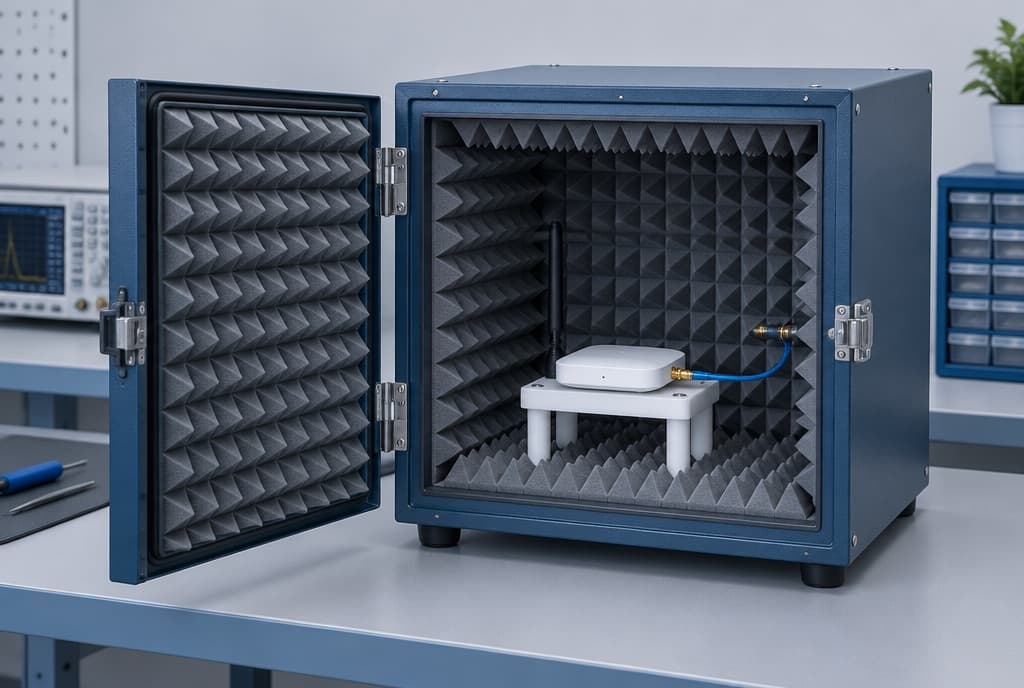
Compliance gap mapping and pre-lab analysis before committing to a US laboratory.
Bringing European hardware to the U.S. and Canadian markets requires disciplined navigation of FCC, ISED, PTCRB, and carrier approval pathways — and, where applicable, FDA wireless and FAA-related requirements. Misalignment early in the process often leads to costly redesigns, lab re-runs, and delayed market entry.
We perform early compliance gap mapping and pre-lab analysis so you know exactly what is required before committing to tooling, production, or U.S. test labs. Our work focuses on RF spectrum alignment, radio compliance readiness, technical documentation preparation, and lab strategy — reducing risk and avoiding late-stage surprises.
- Pre-lab gap analysis to avoid costly redesigns
- RF spectrum and radio compliance alignment
- Technical documentation preparation and lab coordination
- FDA wireless guidance integration for medical devices
Covered List and BOM exposure review
Component-level screening against Covered List determinations before a US authorization filing.
From 13 October 2026, a device can be barred from new FCC authorization because of one logic-bearing component produced by a Covered List entity. Who produced the logic parts on the board is what matters, not where your company is registered.
A fixed-scope review of one product: a component-level screen of the BOM, producer identification on flagged parts including white-labelled and rebadged modules, the counterfactual test applied to your device and equipment class, filing-timing assessment against 13 October 2026, and substitution options with their certification and schedule consequences.
- Written exposure summary you can put in front of a customer, a contract manufacturer or an investor
- Typical turnaround two weeks from receipt of the BOM, under NDA
- Not a test lab, not legal advice, not a data subscription
Certification pathway strategy
FCC, ISED, PTCRB, carrier approvals, and FDA wireless guidance where applicable.
The path is decided by the product, not the paperwork: intentional versus unintentional radiator, certified module or own design, SDoC versus Certification, body-worn or not, cellular or not. We define that path before a lab is booked, then hold it through lab coordination, carrier interfaces, change control and production handover when you want senior control of the execution.
- FCC, ISED, and PTCRB certification strategy aligned to your product
- Carrier certification strategy (PTCRB and carrier-specific requirements)
- RF, antenna, baseband and SAR-margin oversight before U.S. lab engagement
- Lab scheduling, escalation handling, and milestone accountability when required
From 13 October 2026 a single component can bar a device from new FCC authorization. If you have a filing in flight or planned, sequencing matters more than it used to.
Why the pending-application window closes when you touch the BOM →